
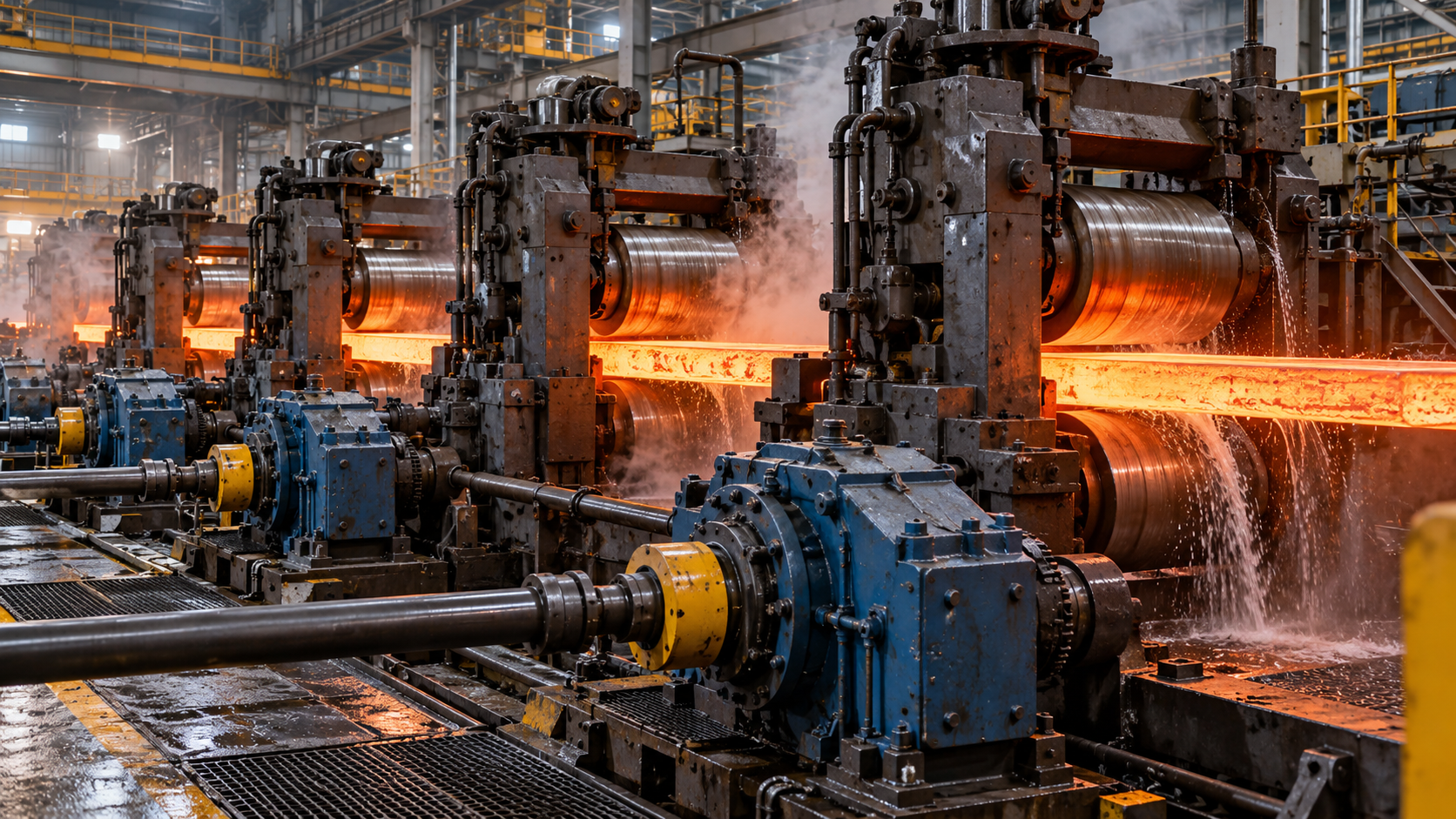
A rolling mill is not a single machine. It is a connected production system in which heating, rolling, material handling, cutting, cooling, electrical equipment, automation and supporting utilities must work together reliably.
From the moment a billet enters the reheating furnace to the point where the finished product reaches the cooling and finishing stages, every section of the mill affects production efficiency, product quality and plant availability.
Understanding how these systems connect is essential not only when planning a new rolling mill, but also when sourcing replacement equipment, upgrading an existing line or identifying the correct spare parts for maintenance.
This guide follows the rolling process from the reheating furnace to the cooling bed and explains the major equipment, supporting systems and critical components involved at each stage.
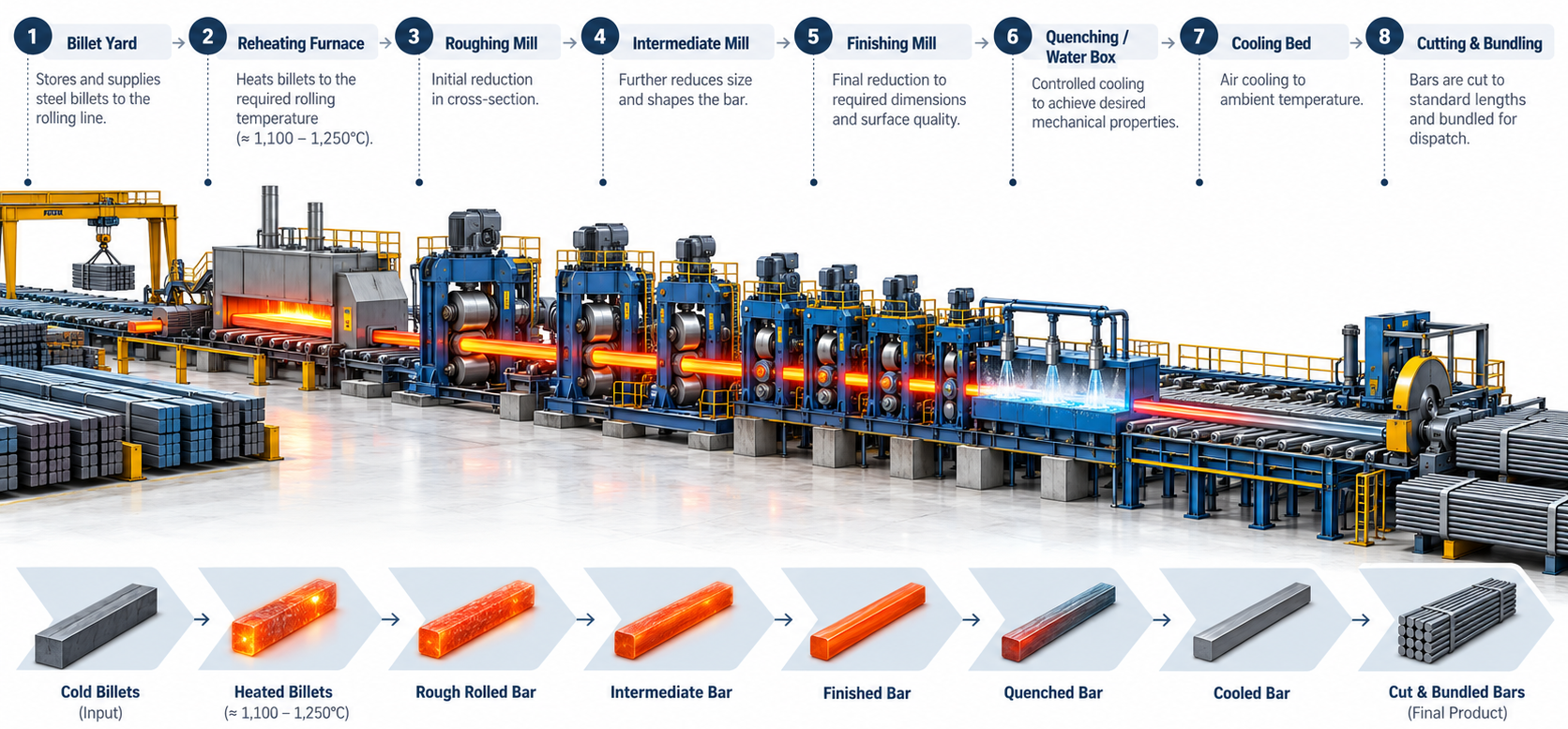
A Rolling Mill Is a Connected Production System
In a rolling mill, each major machine performs a specific function, but no machine operates independently. The reheating furnace must deliver billets at the correct and consistent temperature. The rolling train must then control reduction, dimensions and material movement, while shears, roller tables, pinch rolls and other handling equipment keep the product moving through the line.
Further downstream, quenching systems, cooling beds and finishing equipment influence product handling, temperature control and final preparation. At the same time, motors, gearboxes, drives, sensors, automation systems, lubrication systems and other supporting components keep the entire process synchronized.
This interdependence is why a problem in one section can affect production far beyond that individual machine. Reliable rolling-mill operation therefore depends not only on the main equipment, but also on selecting, maintaining and replacing the supporting components correctly.
1. Reheating Furnace: Preparing the Billet for Rolling
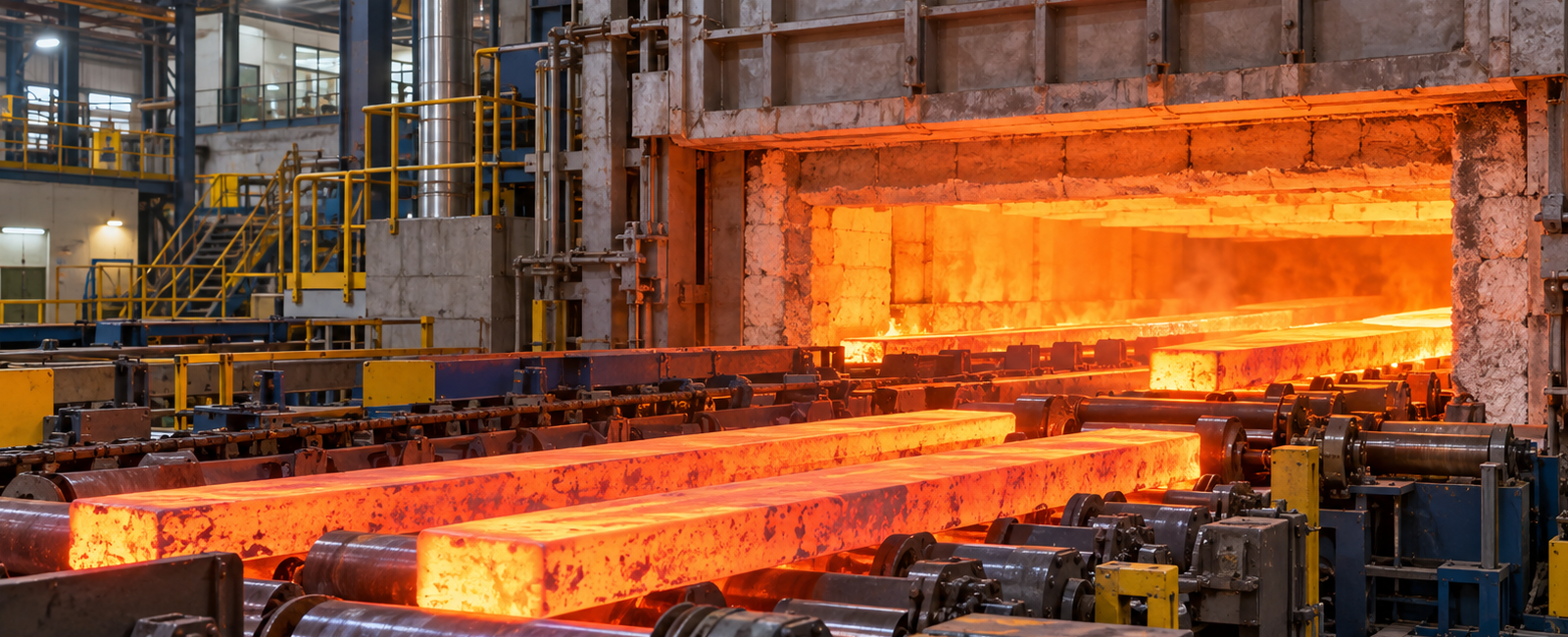
The reheating furnace is the starting point of the hot rolling process. Its primary role is to heat billets or other feed material to a controlled temperature suitable for plastic deformation during rolling.
Consistent heating is critical. If the billet temperature is too low or uneven, the rolling process can require higher forces, increase equipment loading and affect dimensional consistency. Excessive or poorly controlled heating can also increase scale formation, energy consumption and material loss.
A reheating furnace therefore depends on more than the furnace structure itself. Burners, combustion controls, temperature measurement instruments, refractory systems, charging and discharging mechanisms, and material-handling equipment all contribute to reliable operation.
When maintaining or sourcing components for a reheating furnace, the technical requirement should consider operating temperature, fuel type, furnace capacity, material dimensions, existing equipment configuration and compatibility with the plant’s control system.
Key Equipment and Components
• Burners and combustion systems
• Furnace charging and discharging equipment
• Temperature sensors and instrumentation
• Refractory and insulation systems
• Roller tables and material-handling equipment
• Drives, motors and gearboxes
• Valves, actuators and control components
• Electrical and automation systems
2. Rolling Train: Where Shape and Dimensions Are Created
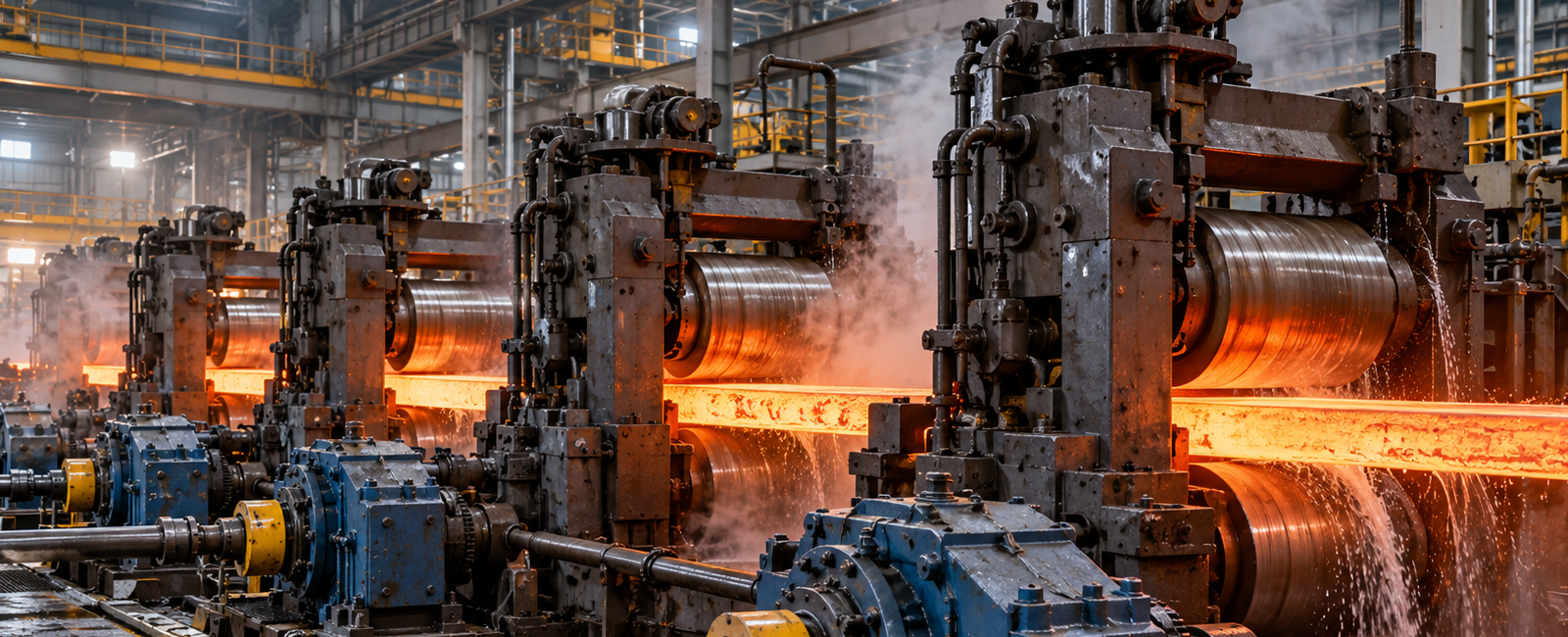
Once the billet leaves the reheating furnace, it enters the rolling train, where its cross-section is progressively reduced and shaped through a sequence of rolling stands.
Depending on the mill configuration, the rolling train may include roughing, intermediate and finishing stands. Each stage performs a controlled reduction while maintaining the required material movement, dimensions and production speed.
Reliable rolling depends on the interaction of rolls, mill stands, guides, bearings, gearboxes, couplings, motors and drive systems. A problem in any one of these components can affect alignment, product dimensions, surface quality or mill availability.
When replacement equipment or spares are required, dimensions alone may not be sufficient. Operating speed, load, material grade, torque, interface dimensions and the existing equipment configuration should also be considered.
Core Rolling Equipment
• Roughing mill stands
• Intermediate mill stands
• Finishing mill stands
• Rolls and roll assemblies
• Guides and guide boxes
• Bearings and bearing housings
• Rolling mill gearboxes
• Couplings and drive shafts
• Motors and drive systems
• Pinions and transmission components
3. Shearing and Material Control
Material must move through a rolling mill at the correct speed, position and timing. Shears and material-handling equipment help control this movement between different stages of the line.
Flying shears, crop shears and other cutting equipment may be used to remove unsuitable ends, divide material or prepare the product for downstream processing. Pinch rolls, roller tables, loopers and guides help maintain controlled material flow through the mill.
Because these systems work directly with moving hot material, synchronization with the rolling speed and control system is important. Mechanical wear, incorrect alignment or unsuitable drive components can quickly affect production continuity.
Typical Equipment
• Crop shears
• Flying shears
• Pinch rolls
• Loopers
• Roller tables
• Guides
• Conveying equipment
• Gearboxes and drive assemblies
• Sensors and control components
4. Quenching and Controlled Cooling
After rolling, certain products pass through controlled cooling or quenching systems before reaching the cooling bed. These systems help manage the temperature of the product as it leaves the finishing section of the mill.
A typical quenching arrangement can include water boxes, spray systems, piping, pumps, valves, pressure-control equipment and instrumentation. Stable water flow and accurate control are important for consistent operation.
Pumps, valves, nozzles, sensors and associated control equipment should therefore be selected according to the required flow, pressure, temperature and operating conditions of the mill.
Key Quenching System Components
• Water boxes
• Spray headers and nozzles
• Industrial pumps
• Valves and actuators
• Piping and fittings
• Pressure and flow instruments
• Temperature sensors
• Electrical and automation components
5. Cooling Beds and Finishing Equipment
After rolling and controlled cooling, the product must be transferred, cooled and prepared for subsequent handling without disrupting production flow.
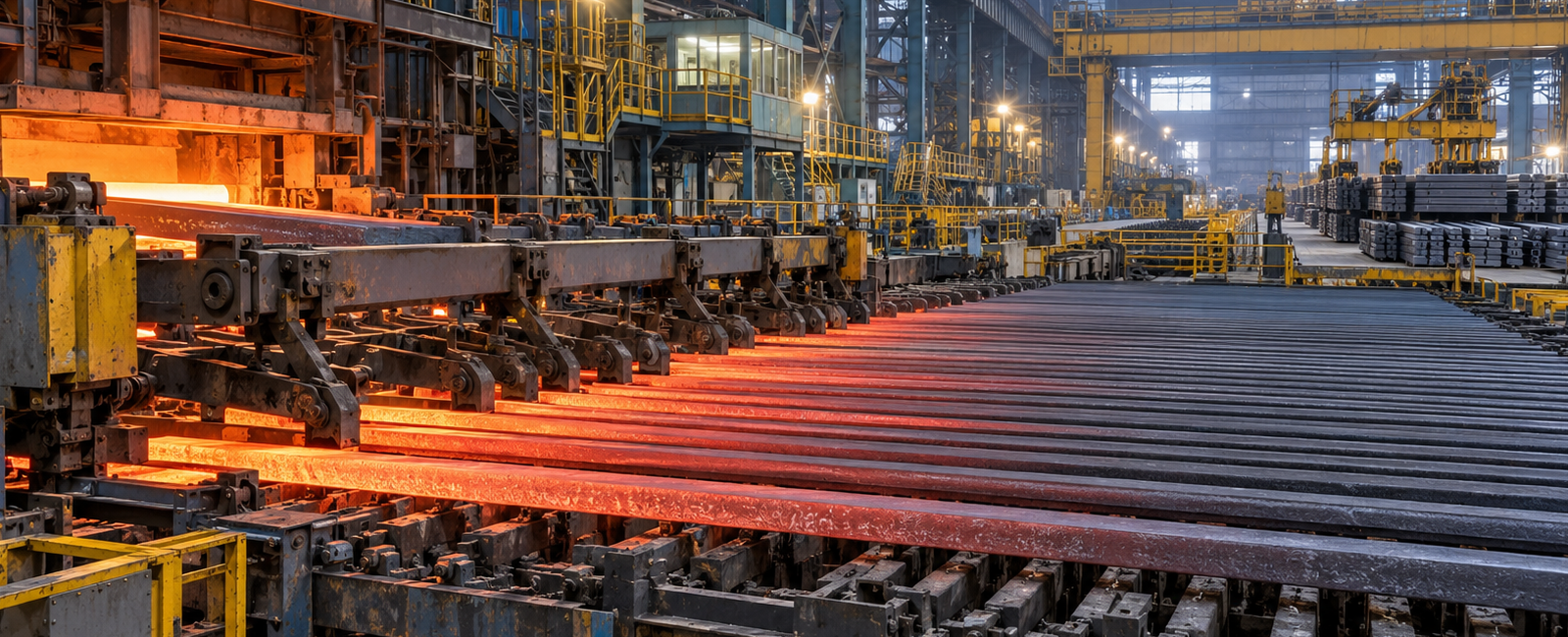
Cooling beds receive hot rolled material and move it progressively while allowing the product to cool in a controlled manner. Depending on the mill and product type, the system may also support alignment, transfer and preparation for cutting or bundling.
Reliable operation depends on mechanical components such as racks, walking mechanisms, transfer systems, roller tables, drives, gearboxes, bearings and alignment equipment. Wear or synchronization problems in these systems can interrupt downstream production even when the rolling stands themselves are operating correctly.
Downstream finishing equipment may include cold shears, cutting systems, straightening equipment, conveyors, bundling systems and other product-handling machinery.
Cooling and Finishing Equipment
• Automatic cooling beds
• Walking-rake mechanisms
• Roller tables and transfer systems
• Cold shears and cutting equipment
• Straightening equipment
• Conveyors
• Bundling and handling systems
• Gearboxes, motors and drives
• Bearings and mechanical transmission components
6. Electrical Drives and Automation
Mechanical equipment provides the physical movement in a rolling mill, but electrical and automation systems coordinate how that equipment operates.
Motors and drives control equipment speed and torque, while PLCs, sensors, encoders, instrumentation and control systems monitor operating conditions and synchronize different sections of the line.
Automation becomes particularly important where multiple machines must respond to changing material speed, position, temperature or production conditions. A failure in a sensor, drive or control component can therefore interrupt equipment that is mechanically healthy.
When replacing electrical or automation components, technical compatibility is essential. Voltage, power rating, communication protocol, input/output requirements, control logic, mounting configuration and integration with existing equipment should all be checked before substitution.
Typical Electrical and Automation Requirements
• AC and DC motors
• Variable-frequency drives
• PLC systems
• HMI systems
• Encoders and position sensors
• Temperature and pressure instruments
• Proximity and photoelectric sensors
• Control panels
• Switchgear and electrical components
• Industrial communication and control hardware
7. Supporting Systems That Keep the Mill Running
Some of the most important components in a rolling mill are not part of the primary rolling line. Hydraulic systems, lubrication equipment, cooling-water systems, bearings, seals, hoses, valves and other auxiliary components operate continuously in support of the main machinery.
These systems protect equipment, provide controlled movement, remove heat and reduce friction. Their individual cost may be small compared with a mill stand or gearbox, but their failure can still stop production.
This makes maintenance planning and correct spare selection particularly important. Plants should identify critical supporting components, maintain accurate technical records and determine which items require ready availability based on failure risk and replacement lead time.
Common Supporting Components
• Hydraulic pumps and power units
• Hydraulic cylinders
• Industrial pumps
• Valves and actuators
• Lubrication systems
• Bearings and housings
• Oil seals and mechanical seals
• Industrial hoses and fittings
• Couplings
• Filters and strainers
• Cooling-water components
• Instrumentation and sensors
8. What Information Should You Send When Requesting Rolling Mill Equipment or Spares?
Accurate technical information at the enquiry stage can significantly reduce delays, incorrect quotations and compatibility problems when sourcing rolling mill equipment or spare parts.
The amount of information required will depend on the component, but providing available drawings, photographs, nameplate details and operating information helps the supplier understand the actual requirement rather than relying only on a product name.
Useful Information to Include in Your RFQ
• Equipment or spare-part name
• OEM or manufacturer, if known
• Equipment model or part number
• Technical drawing or dimensional sketch
• Clear photographs of the existing component
• Nameplate photographs
• Required quantity
• Material grade or specification, where applicable
• Dimensions and interface details
• Operating speed, load, pressure or temperature, where relevant
• Electrical ratings for motors, drives and automation components
• Existing application and operating conditions
• Required delivery destination
• Required delivery schedule
9. Supporting Rolling Mill Requirements from Equipment to Spares
Rolling mills depend on a broad range of mechanical, electrical, automation and auxiliary equipment. Managing these requirements becomes more complex when a plant must coordinate multiple suppliers, verify technical compatibility or source replacement components for existing machinery.
Mechxport supports industrial customers with the sourcing and supply of capital and peripheral equipment, spare parts, consumables, industrial accessories and related technical requirements.
For rolling mills and steel plants, this can include requirements across mechanical equipment, drive systems, electrical and automation components, pumps, valves, bearings, material-handling equipment and other plant-critical items.
The objective is not simply to locate a product, but to understand the technical requirement clearly enough to support the correct sourcing and supply process.
Have a Rolling Mill Equipment or Spare Requirement?
Share your BOQ, technical specification, drawing, part number or equipment details with the Mechxport team. Our team can review the requirement and assist with the appropriate sourcing and supply process.
